Sightread
Tap four times.Forty of forty. The whole band is in.
Set the tempo.
Counted in at 104 beats a minute.
Before anybody plays
Count us in.
Daniel Ortiz is a middle-school band director in Tucson. He built Sightread so he could stop collecting paper practice charts. 30 schools use it. His district wants to buy it for every school it has, so it has to survive a procurement meeting dressed in clip art.
- Client
- Sightread: Daniel Ortiz, Tucson
- Brief
- For 12-year-olds first, and a school district second
- We made
- The count-in mark, type set by loudness, six pencil marks, the student’s screens, the director’s seating chart, a wall chart, stand tags, a folder, the district’s one page and the pencil
- Time
- 10 weeks
Practice Tracker!!
Log your minutes every day!
62% of the way to your weekly goal!
SUBMIT MINUTESA rainbow bar and gold stars. In a band room, praise is a nod from the podium.
Before the downbeat
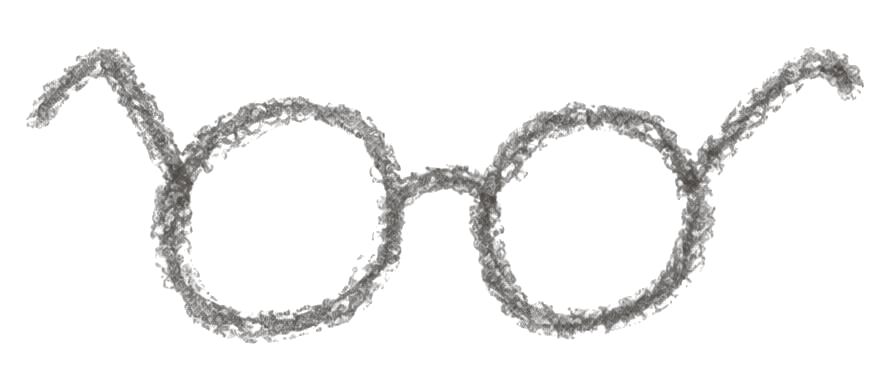
Two things every band student knows. Nothing starts until somebody counts four. And every part is covered in pencil: a circled note, a breath mark, a pair of glasses drawn over the bar where you must watch the conductor.
Four, then the name
One bar of four pencil beats, a barline, then the name. It always comes in on five.
- 1 · 2 · 3 · 4
- Four pencil beats
- |
- barline
- 5
- enters on 5
On ink, the staff and the name turn to part paper. The pencil stays pencil.
- Stand header
- Folder stamp
- App icon 60px
- Badge 29px
For small places: the bar alone. Four beats still, and whatever follows it is on five.



 Sightread
In pencil, please
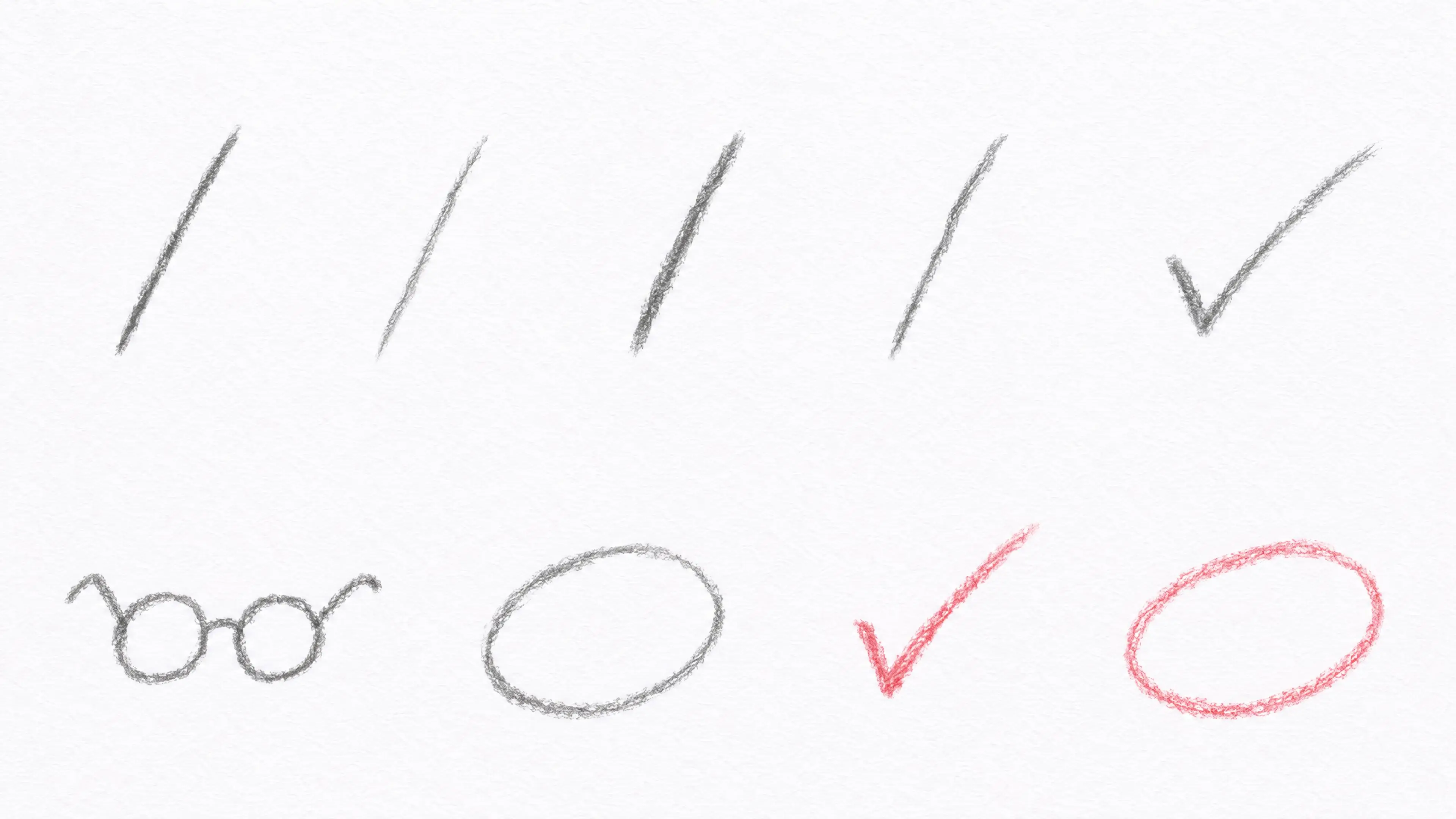
Six marks, each drawn by hand once. Every one is something a player already writes on a part.

- Student · 2B gray
Count
Four beats before anything starts.
- Student · 2B gray
Practiced
One for each day you did.
- Student · 2B gray
Again
This bar, slowly, tomorrow.
- Student · 2B gray
Watch here
Look up at the podium at this bar.
- Mr. Ortiz · Teacher red
Heard it
Only Mr. Ortiz makes this mark.
- Mr. Ortiz · Teacher red
Circled
Mr. Ortiz wants to hear this bar.
- Four slashes before bar 17: count yourself in.
- Gray oval, bar 20: her own “again.”
- Gray ticks, bars 21 and 27: practiced.
- Red oval, bar 24: Mr. Ortiz wants to hear it.
- Glasses, bar 29: look up.
From pp to ff
Music has six volumes, so the brand has six sizes with the same names. This page is set in them.
Count us in.
Gray is yours. Red is mine.
Part paper, engraver’s ink and a little brass. Students mark in pencil gray. Red is only for a mark Mr. Ortiz makes.
- Part paper#F2EAD6
- Sheet#FFF8E6
- Engraver’s ink#1C1A17
- Brass#B08C3A
- Pencil gray#6F6C68
 Teacher’s red#C5352B
Fridays, by the plaques
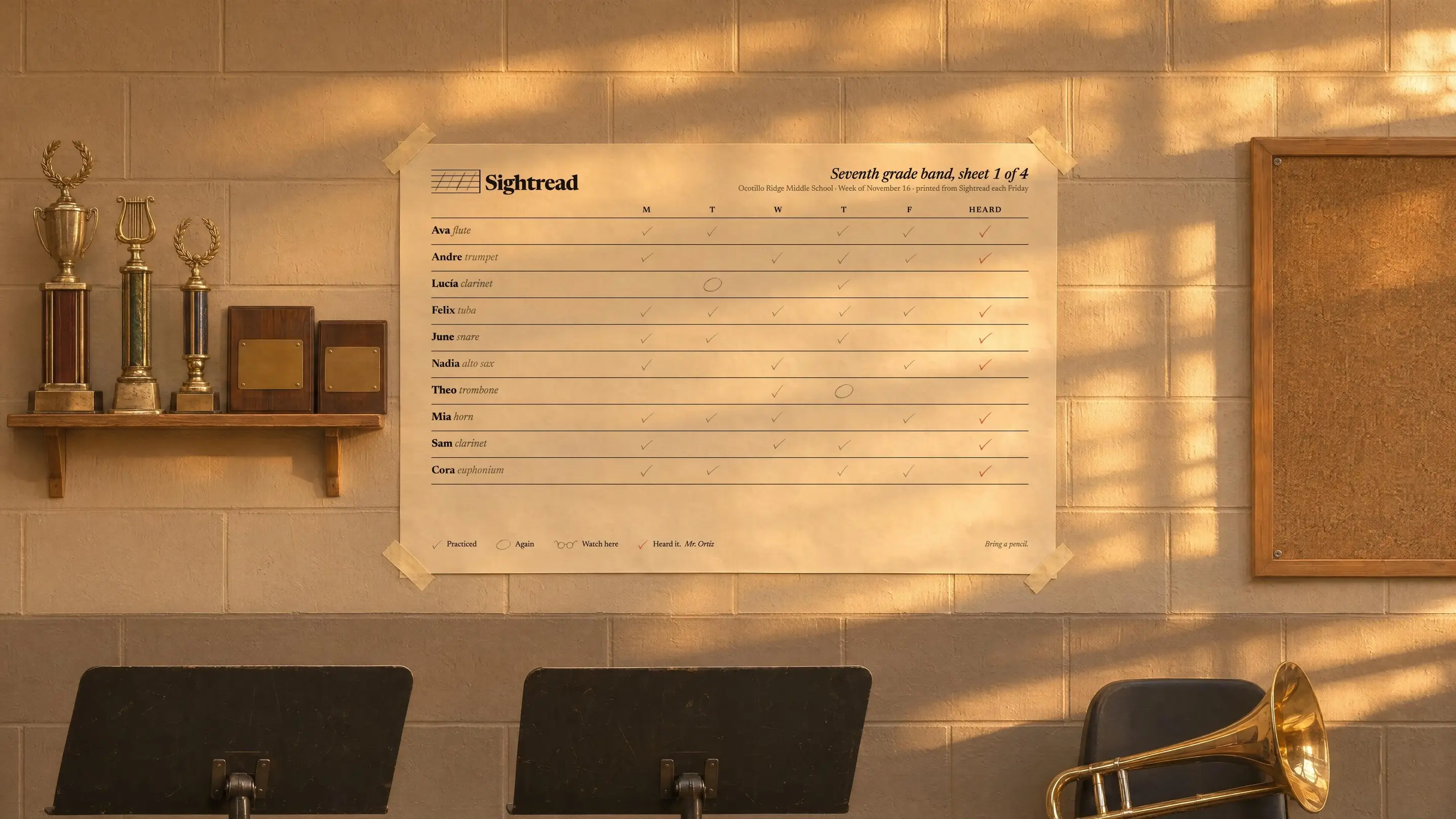
It never listens.
It counts minutes and marks, and the bars you went back to.
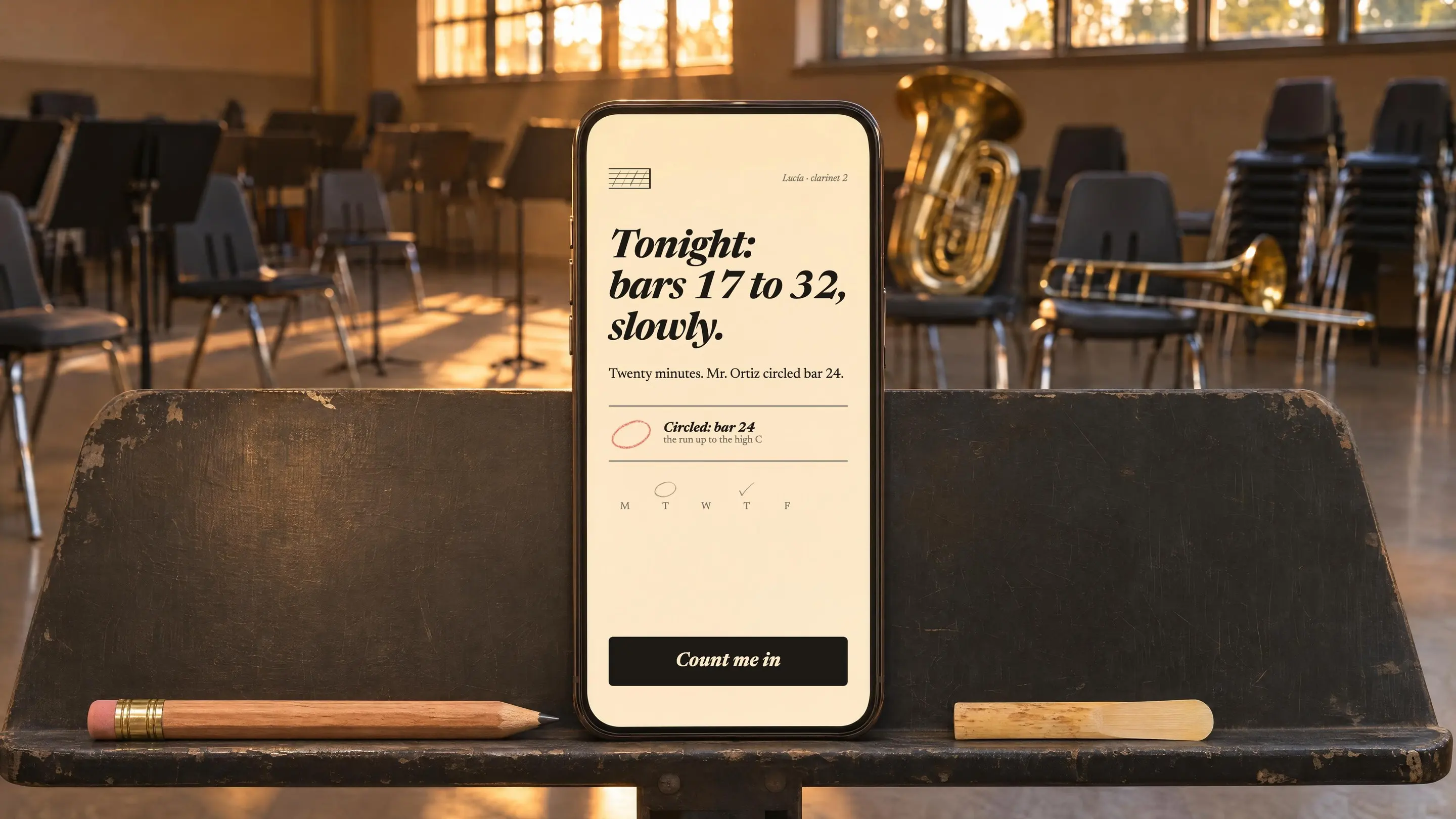
Lucía · Clarinet 2 Tonight: bars 17 to 32, slowly.
Clarinet 2 · Bars 17 to 32, slowly · 20 min. Mr. Ortiz circled bar 24.

Mr. Ortiz circled bar 24
the run up to the high C
MTW TFCount me in
Tonight
Lucía · Clarinet 2 Three
Tap four times at your own speed. It starts on five.
The count
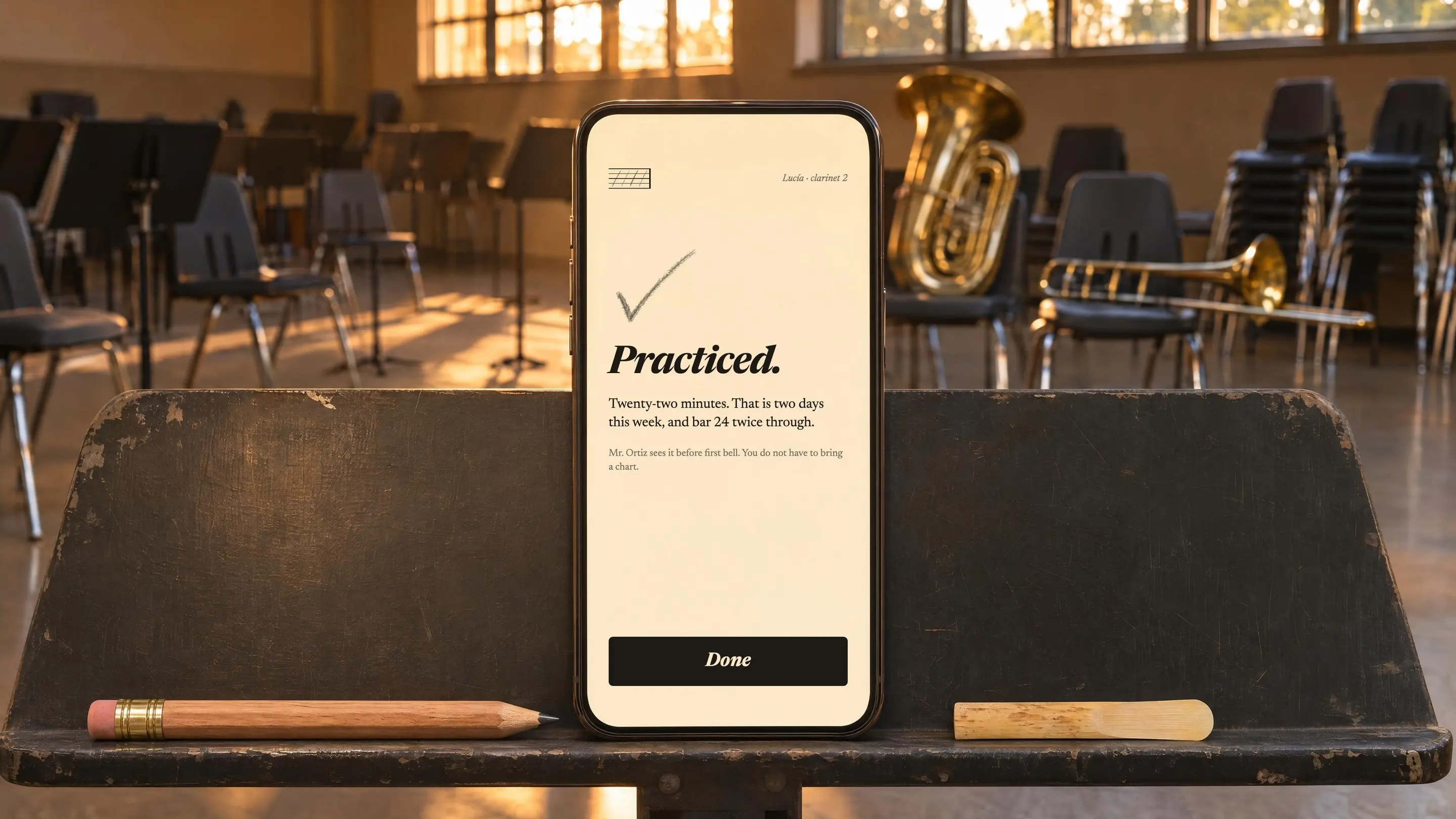
Lucía · Clarinet 2 Practiced. 22 minutes.
That is two days this week, and bar 24 twice through. Mr. Ortiz sees it before first bell.
You do not have to bring a paper chart.
DonePracticed
Nine empty chairs
Monday, before first bell, and he already knows who practiced. Each empty chair has a name under it.
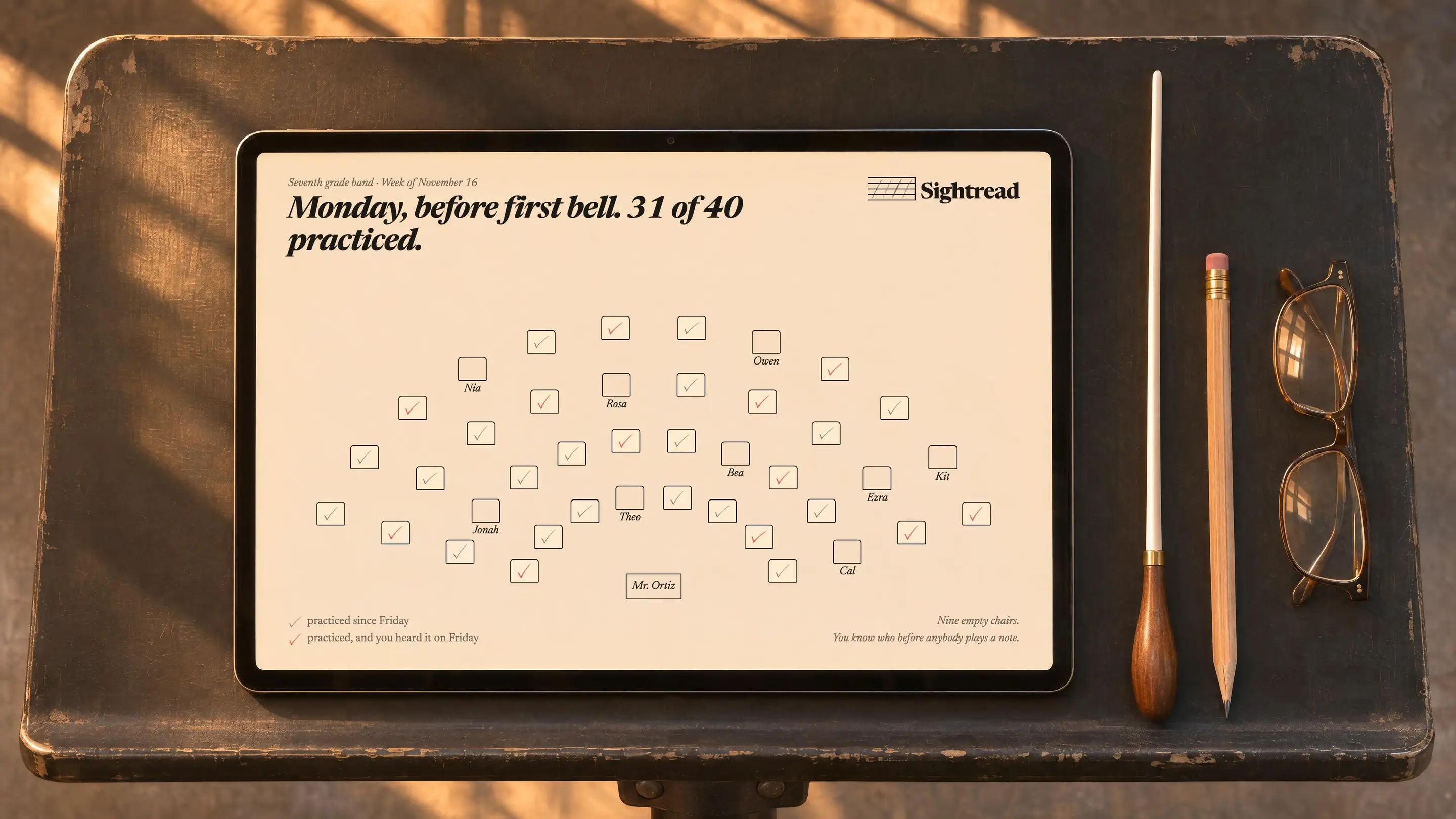
On the stand, in the folder
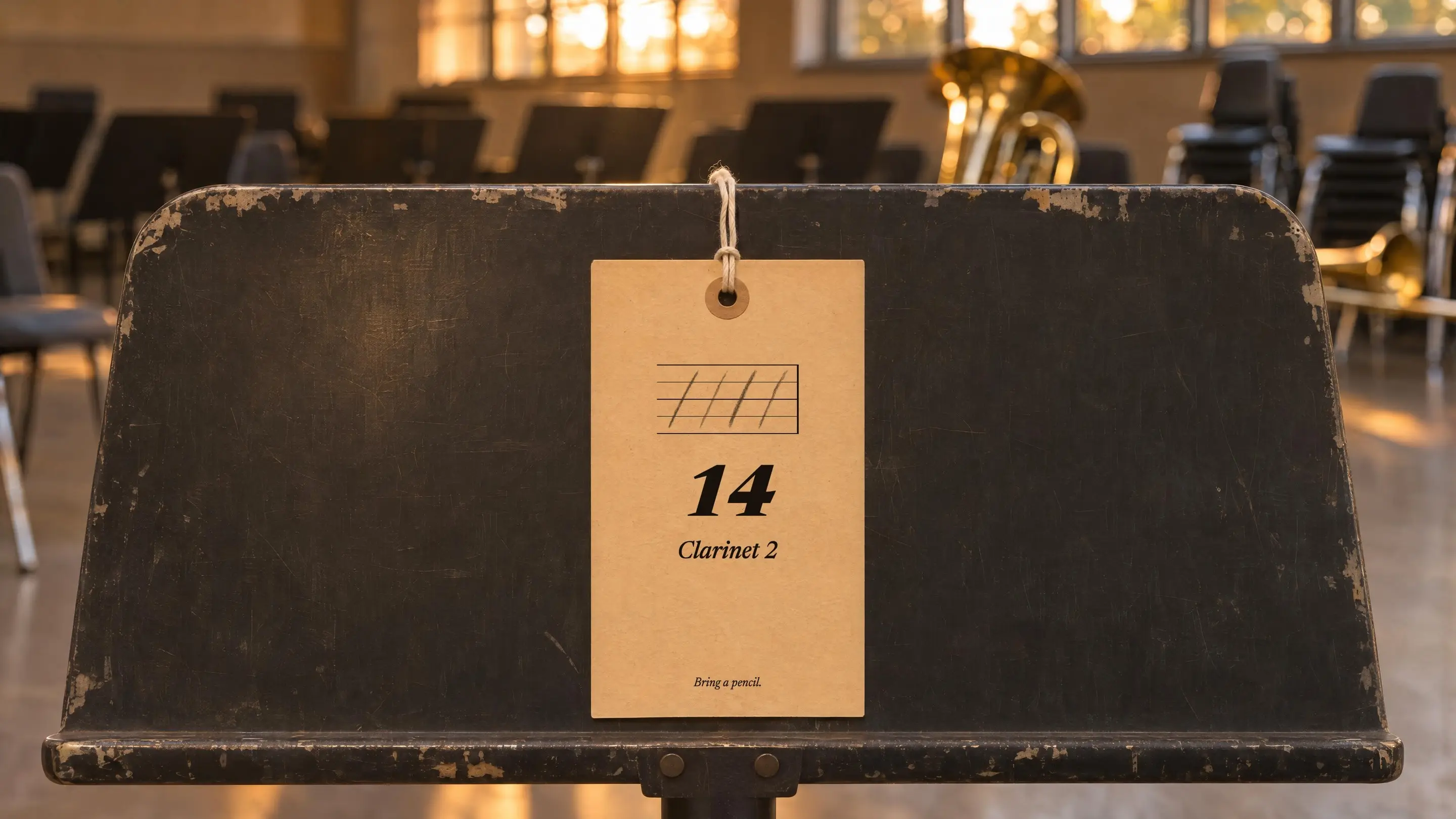
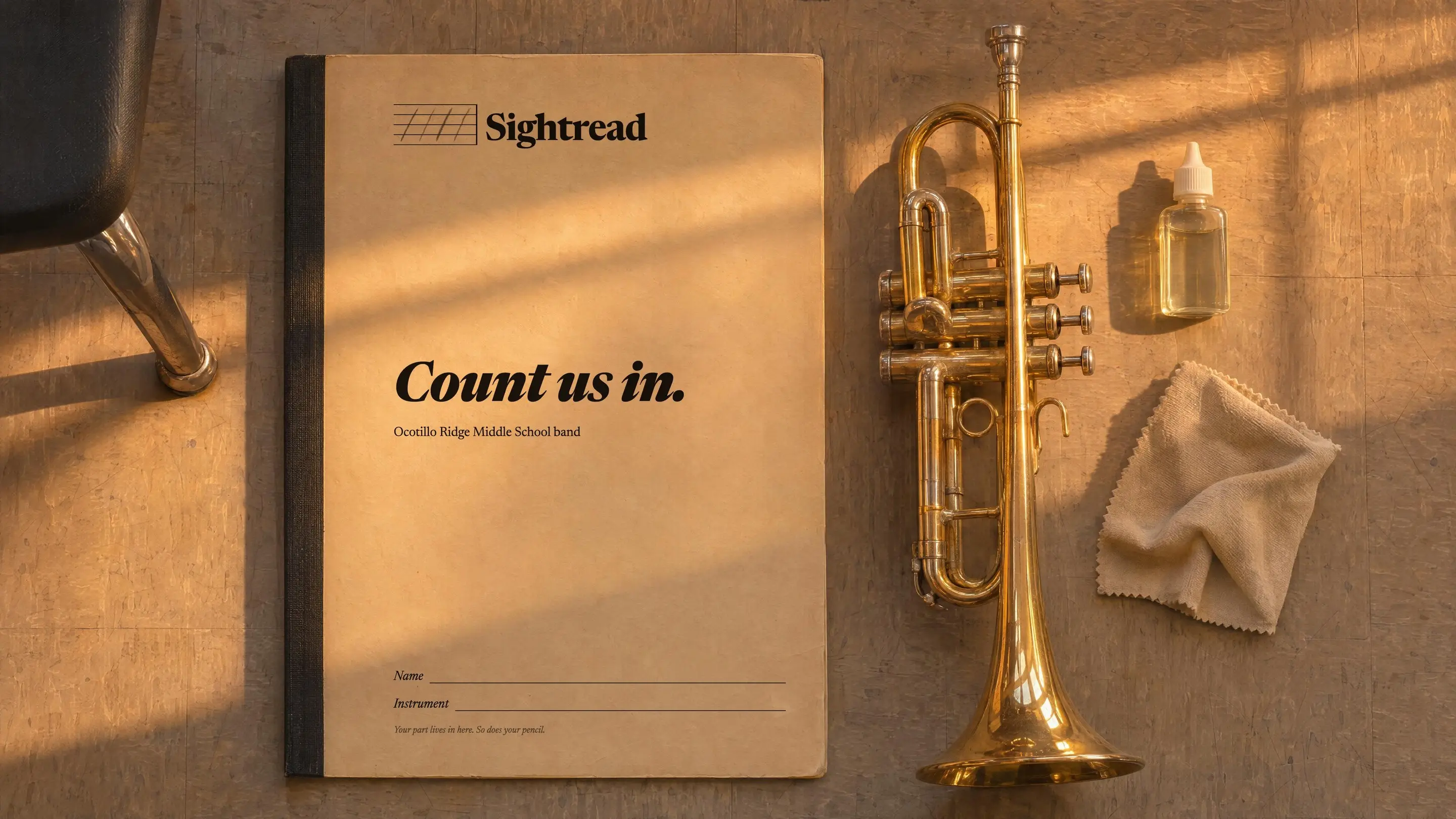
The part the district reads
The page that won the district. It said 30 schools, and that was true. It is 44 now.
Know who practiced before anybody plays a note.
Sightread replaces the paper practice chart. Students count themselves in and practice. Their director sees the band fill in, seat by seat. It was built by a middle-school band director in Tucson.
- 30
- schools use it today.
- 4 in 5
- students practice at least three days a week. It was two in five on paper.
- 0
- recordings kept. It counts minutes and marks. It never listens.
- What does a student need?
- Any phone or school laptop, and a pencil.
- What does a director see?
- The seating chart, filled in. Who practiced, which bars they went back to, and who needs to be heard.
- What does it keep?
- First names, instruments and practice marks. No audio, no video, no grades.
- What does it cost?
- One price for the district, every school and every band in it.
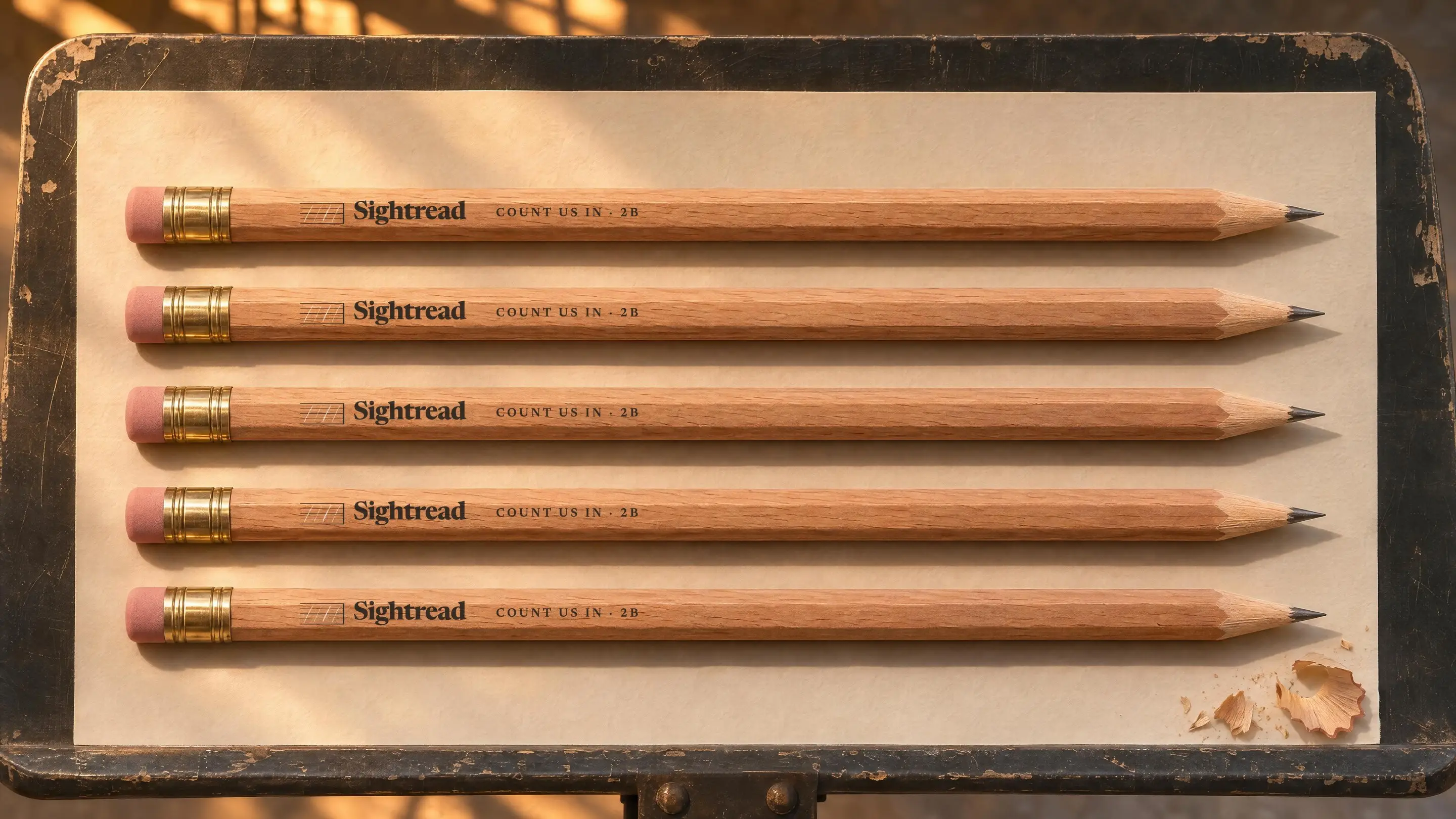
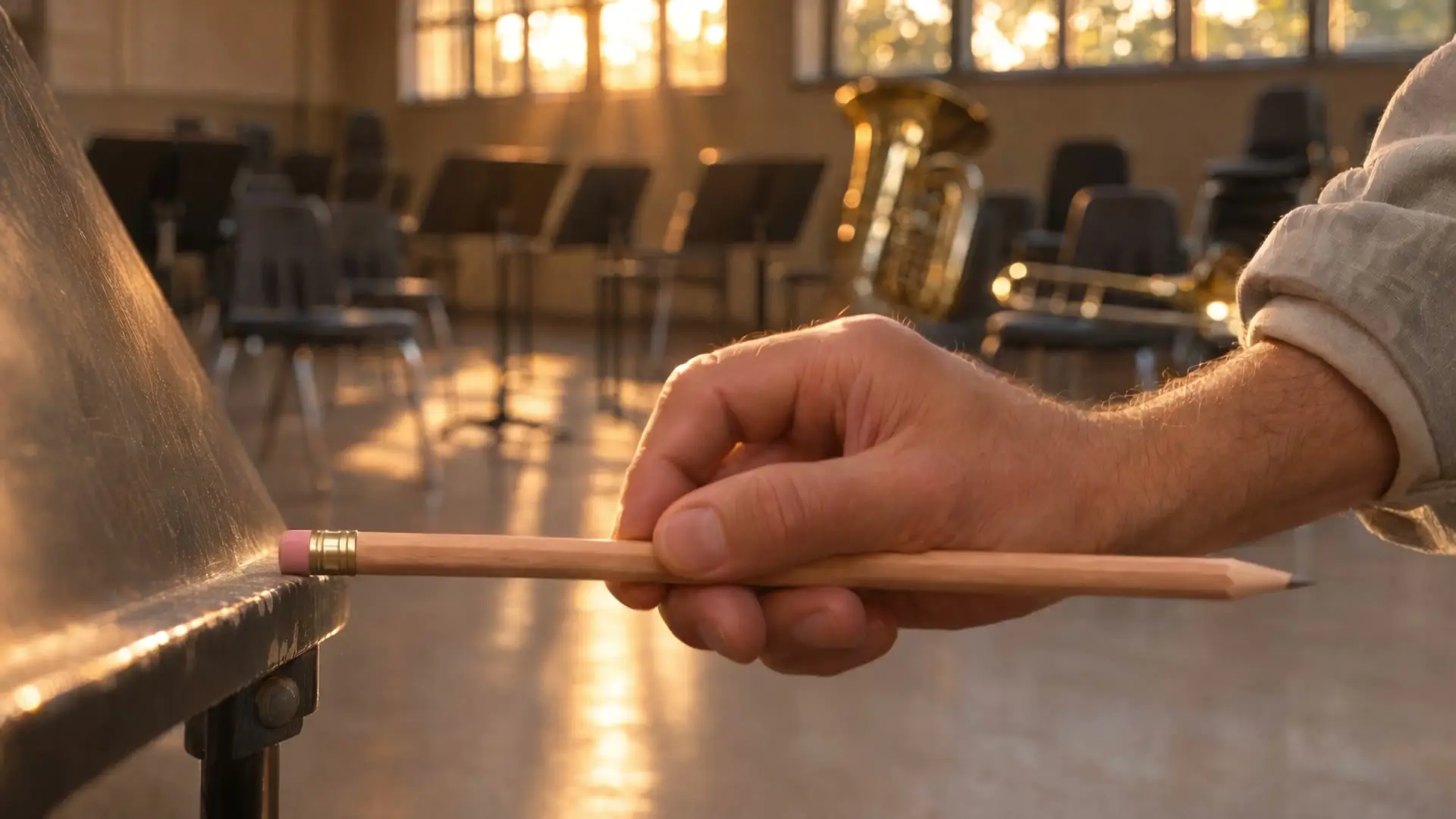
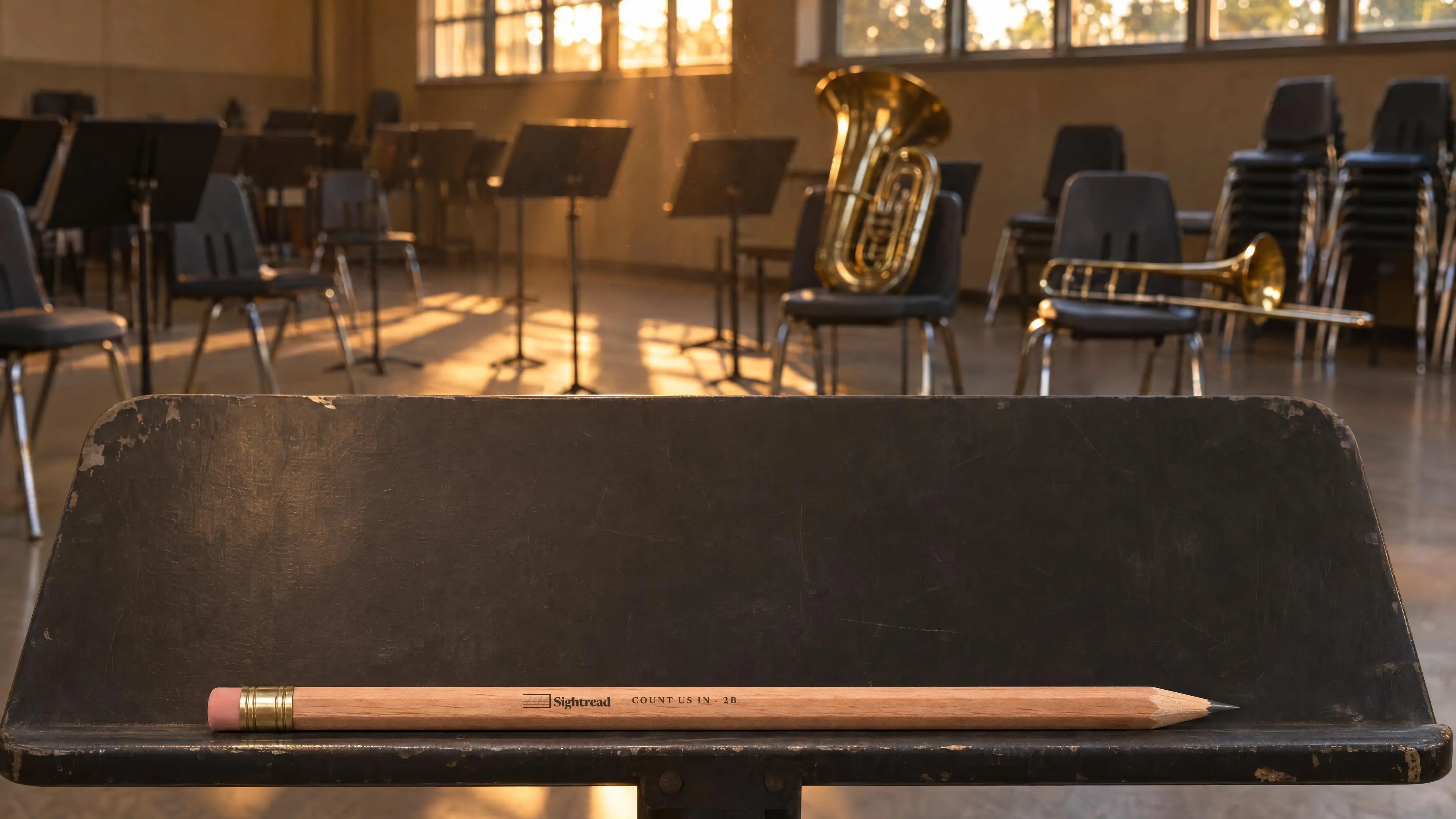
The whole brand fits on a pencil, because bring a pencil is the first rule of every band room in America.
Ours in gray. Daniel’s in red.
Every brand we make sits somewhere on a line from ensemble to odd. Here the line is a part, and each bar is a step along it. We marked bar 40. Daniel marked bar 24, and only the teacher marks in red.

- Ours, in gray: bar 40, struck
- A bolder look than a band room is used to: bright color, a big gesture, the count as a show.
 Daniel’s, in red: bar 24
- Paper, engraver’s ink and pencil. All the odd is in how it moves: it counts four, then everything arrives at once.
“It is going to hang in a band room next to 40 years of festival plaques. It should look like it has always been there.”
44 schools use it now. On Mondays he knows who practiced before anybody plays a note.